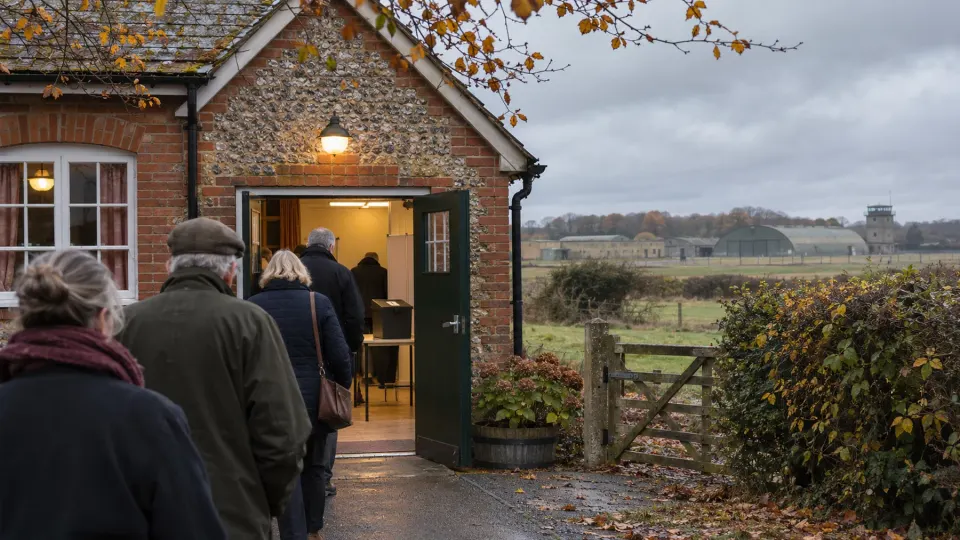
Residents of Barnham in Suffolk have voted 257–16 in favour of symbolic independence from the United Kingdom, with one spoiled ballot, in a protest against proposals to accommodate up to 931 asylum seekers at the former RAF Barnham site.
The result was announced on Saturday 21 November after a village-hall poll organised by Barnham Residents' Association. It is emphatic as an expression of the participating voters' view. It is not legally binding, does not remove Barnham from the UK and does not create the “Bailiwick of Barnham” as a recognised Crown dependency.
That distinction is not pedantry. The humour and theatre made the vote national news, but the underlying planning dispute is real. Residents say they have not been properly heard about a proposed development larger than the village population. The government says no final decision has been taken and that the site remains subject to planning, assessments and approvals.
What residents voted on
Before the poll, parish council chairman John Bauer described the proposal as a petition for Crown dependency status, comparing the idea with Jersey, Guernsey and the Isle of Man. He said a Yes result would lead supporters to declare a “Bailiwick of Barnham” while retaining loyalty to the Crown and trying to remove the village from Home Office jurisdiction.
There is no domestic legal mechanism by which a parish-hall ballot can create that status. Crown dependencies have distinct constitutional histories and relationships with the Crown; they are not a menu option available after tea and ballot counting. The Barnham vote was designed to attract attention and demonstrate opposition, not to complete a constitutional transfer.
Sky News reported that roughly 400 to 500 people were eligible to vote. The declared count totals 274 ballots, including the spoiled vote. The result therefore shows a large majority among those who cast a ballot, but it should not be rewritten as 257 votes from every resident or as unanimous opposition across the wider area.
What is proposed for RAF Barnham
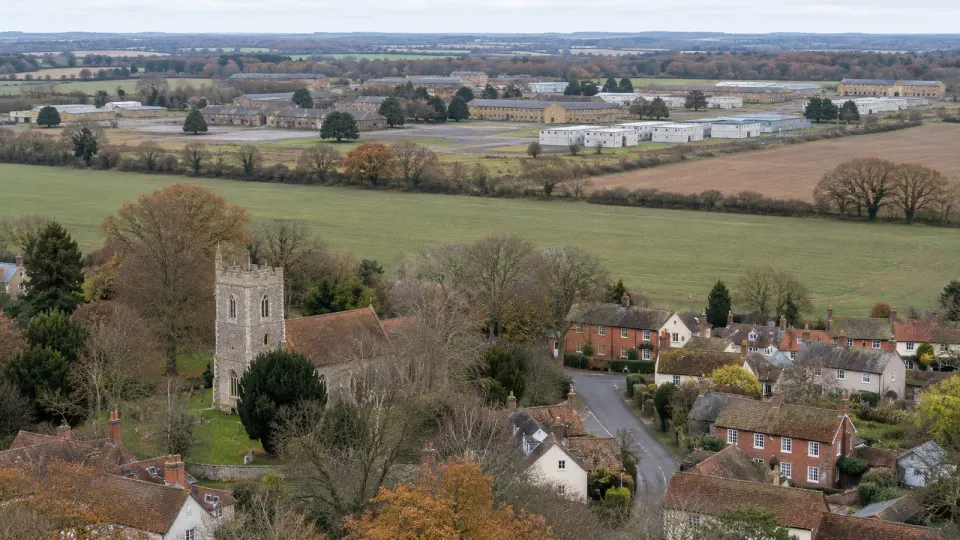
The Home Office is considering the former military site for non-detained asylum accommodation. West Suffolk Council says a revised Urgent Crown Development application submitted on 14 October proposes space for up to 931 people, using existing buildings, modular accommodation and associated infrastructure. An earlier proposal for up to 1,250 people was withdrawn.
The Home Office factsheet says the site is no longer in active MOD use and, if taken forward, would house single adult male asylum seekers aged 18 to 65. It says occupation would be phased, the accommodation would be designed to be largely self-contained, and a specialist provider would manage the site with security and support arrangements.
The same factsheet is explicit that a planning application does not predetermine the outcome. It says no final decision has been made. West Suffolk Council opposes the proposal, citing environmental and legal concerns connected with the Breckland Special Protection Area and Special Area of Conservation. Those objections will have to be considered through the planning process rather than settled by the symbolic referendum.
The scale helps explain local anxiety. When a proposal mentions up to 931 residents beside a small village, pressure on roads, health services, policing and community relations becomes an obvious question. It does not follow that every predicted impact will occur, but asking for evidence and mitigation is legitimate. So is asking whether alternative accommodation is safer, more suitable and better value than hotels.
Reporting also needs to separate objections to the site from claims about the people who may live there. Asylum seekers are individuals awaiting decisions under a legal process, not a single character in a village dispute. Concern about planning, consultation and capacity does not require inventing criminality or treating future residents as a hostile force.
OutOut has seen what happens when immigration stories outrun verification. In Portsmouth, protesters once mistook a Pakistan under-19 cricket team for asylum seekers. Barnham's ballot is a real event tied to a real government proposal. Keeping those facts straight is the minimum needed to prevent another policy debate from becoming amateur fiction with a postcode.
What happens next
The referendum itself changes no planning document. The relevant decisions remain with government and the planning process for Urgent Crown Development. Residents, the council and other consultees can submit evidence and arguments. Ministers must decide whether the proposal meets the legal, environmental and operational requirements.
The Home Office says it is trying to close asylum hotels and move to alternative accommodation, including former military sites. It argues that such sites can be self-contained and secured, reducing local impacts. Opponents question whether Barnham is suitable and whether the claimed savings justify the scale and location. Those positions can be tested; symbolic independence cannot bypass the test.
The result may still have political force. A 257–16 vote produces a headline that a standard consultation response rarely achieves. It places pressure on ministers and gives campaigners a clear number to cite. The danger is that the constitutional joke becomes so entertaining that the planning evidence disappears behind it.
The OutOut verdict
Barnham has not left the United Kingdom. No border post will appear beside the village sign, passports remain unnecessary, and the parish council is unlikely to start negotiating its own fisheries treaty before lunch.
But dismissing the ballot as mere theatre would miss why it worked. Residents used an absurd constitutional device to argue that ordinary consultation felt ineffective. The government can point out—correctly—that the vote has no legal force. It still has to answer the less funny questions about scale, services, ecology, security and why this site is suitable.
The Bailiwick of Barnham exists as a protest slogan. The planning application exists as a government process. One makes better television; the other decides what will actually happen.
Sources
- Sky News: Barnham referendum result and Home Office response, updated 21 November 2026.
- Home Office: MoD Barnham factsheet, updated 13 November 2026.
- West Suffolk Council: RAF Barnham application, updated November 2026.
- West Suffolk Council: Opposition to modified plans, published 26 October 2026.