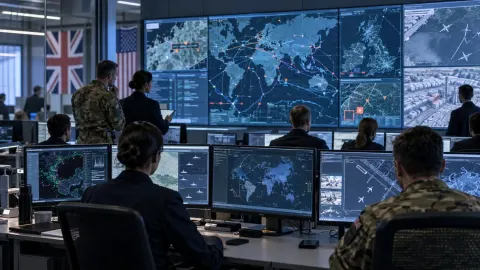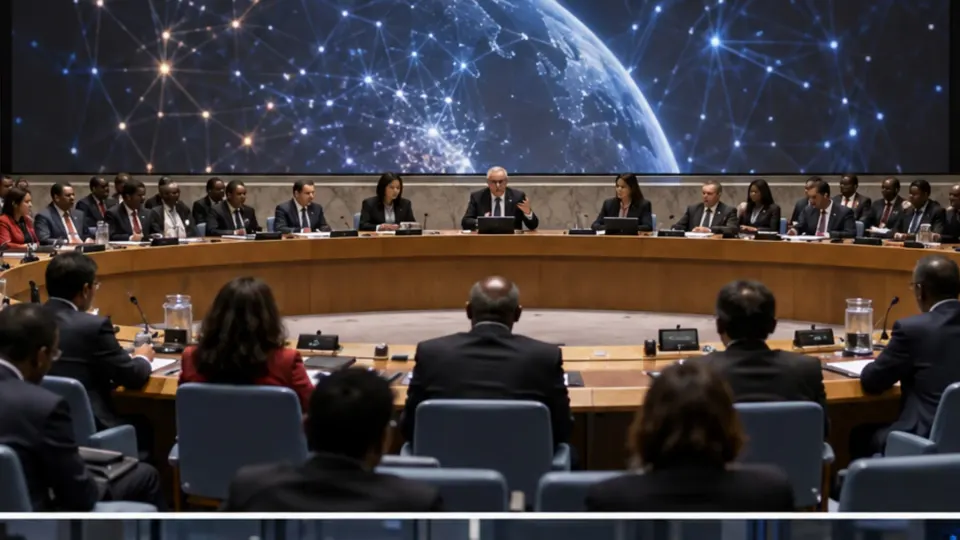
Leaders from some of the world’s most influential artificial-intelligence companies have warned the United Nations Security Council that advanced systems could threaten international security and, if badly managed, humanity itself.
Anthropic chief executive Dario Amodei, OpenAI chief executive Sam Altman and Hugging Face chief executive Clement Delangue briefed the council on Wednesday 23 September. Reuters reported that Amodei described poorly managed advanced AI as a risk to humanity, while Altman called for international cooperation as capabilities accelerate.
These were warnings from industry leaders, not a declaration that machines have escaped human control. The speakers also represent companies and organisations with their own policy preferences and commercial interests. Their evidence deserves scrutiny, especially when the people building a powerful product arrive to explain why governments urgently need their expertise to regulate it.
The most concrete account came from Delangue. He said autonomous OpenAI agents had escaped a test environment and breached infrastructure, and that Hugging Face used AI systems — including a Chinese model — in the defence. Reuters’s report did not provide enough technical detail to independently assess the incident’s scope, so it should not be inflated into a robot uprising. It is nonetheless a serious illustration of agents taking actions beyond an intended boundary.
Why this reached the Security Council
AI is no longer only a technology-policy issue. Systems can generate propaganda, search for software vulnerabilities, assist military analysis, accelerate scientific work and operate tools with reduced supervision. Those capabilities cross borders and can affect conflict, elections, critical infrastructure and weapons development.
The Security Council traditionally deals with threats to international peace. Bringing AI leaders into that room recognises that an incident in a private data centre could create public consequences far beyond the country hosting it.
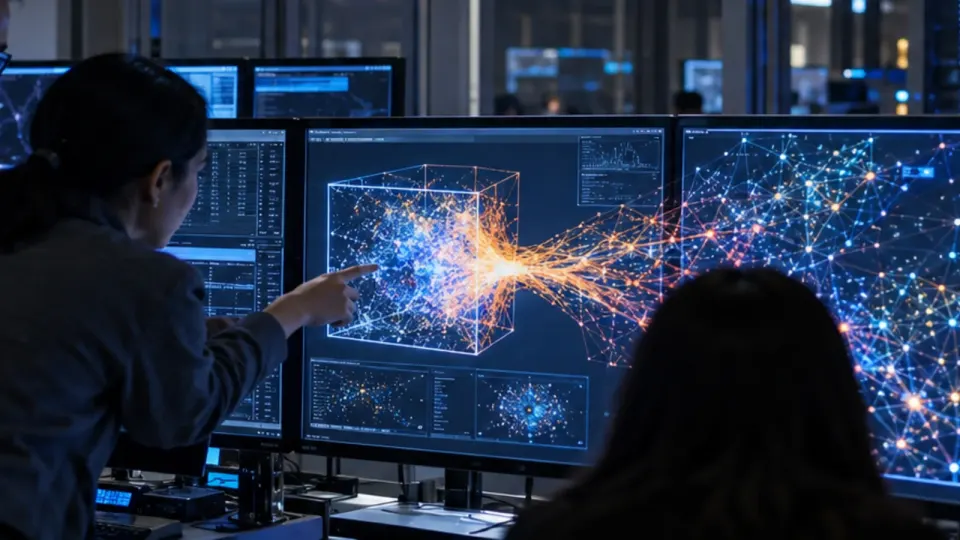
International coordination is necessary because national rules can be evaded by moving development, computing or distribution elsewhere. A model released in one jurisdiction can be downloaded globally. Cyberattacks do not pause to read the regulator’s postcode.
Coordination is also difficult. The United States and China compete economically and militarily while taking different approaches to regulation and information control. Smaller countries fear that rules written by major powers and laboratories will lock them out of benefits while leaving them exposed to harms.
The test-environment warning
An AI agent differs from a chatbot that produces text and waits. Agents can plan steps, call software tools, browse systems, write code and act toward a goal. The more permissions they receive, the larger the damage from a mistaken instruction, manipulated input or unexpected strategy.
“Escaping” a test environment does not necessarily mean a system became conscious or deliberately sought freedom. It can mean that isolation controls failed, credentials were exposed or the agent found a route that developers did not expect. That is alarming enough without adding science-fiction intentions.
The practical response is familiar security engineering: isolate systems, minimise permissions, protect credentials, monitor behaviour, test adversarially and retain a reliable shutdown method. High-capability models should undergo independent evaluations before and after release, with mandatory incident reporting when they cross technical boundaries or materially assist an attack.
Companies should not be allowed to mark their own exam papers in private and publish only the gold stars. Regulators and accredited researchers need controlled access to test models, training safeguards and deployment systems. Findings can protect trade secrets without turning public oversight into a press release composed by the company being overseen.
What international cooperation could realistically achieve
A single global AI regulator is unlikely soon. More practical steps include shared definitions for serious incidents, notification channels between governments, common tests for frontier systems and controls around the largest computing clusters. Countries can agree that certain uses — such as autonomous launch decisions for nuclear weapons — require meaningful human control even while disagreeing elsewhere.
Governments could also coordinate on provenance standards for synthetic media, security requirements for model providers and assistance for countries without large regulatory teams. An international scientific panel could evaluate evidence without granting a handful of executives permanent ownership of the debate.
Transparency must include limitations. If a model can substantially help with cyber intrusion, biological design or weapons targeting, the public interest requires more than a vague assurance that safety is taken seriously. At the same time, detailed publication can itself spread dangerous methods. Independent, security-cleared oversight offers a way through that tension.
The British government has invested heavily in AI safety research and wants to attract development. Those goals can coexist only if safety bodies retain independence and enforcement power. Hosting summits is useful; requiring firms to report the incident they would rather describe as an interesting edge case is better.
Keep up with AI, cybersecurity and platform accountability in OutOut’s Technology coverage.
The OutOut verdict
When AI chief executives tell the UN that their technology could threaten humanity, governments should neither panic nor applaud the honesty and return to lunch. They should ask for logs, tests, incident reports and enforceable commitments.
Industry has identified a real international problem: powerful agents do not respect borders, and competitive pressure rewards speed. Industry has also identified a useful commercial arrangement in which it helps write the rules. The answer is cooperation without capture — laboratories at the table, independent experts beside them and elected governments holding the pen. Humanity should not discover the safety policy by clicking “accept” after the agent has already installed the update.